Technical standards are the formal specifications, certification rules, inspection protocols, and interoperability requirements that decide whether a machine, component, vehicle, or industrial service can enter a given market. In Russian heavy industry and logistics, standards work alongside tariffs, export controls, and financial restrictions as a quieter but often more durable form of market access control. Adjacent concepts include GOST R, EAC certification, Technical Regulations of the Eurasian Economic Union, type approval, industrial safety expertise, and metrological verification. For firms in metallurgy, rail freight, port operations, power generation equipment, and oilfield services, a standard is not an abstraction. It determines whether a replacement bearing can be imported, whether a rebuilt diesel locomotive can be certified, or whether a pressure vessel can be legally operated after a change in supplier.

This matters because sanctions and capital scarcity have not removed the need for compliance. They have changed who can supply compliant equipment, how long certification takes, and what happens when a firm substitutes a non-sanctioned component that does not fit the original technical file. The result is a set of market barriers that are less visible than blocked payments or denied export licenses, but often more consequential for operating continuity.
How Standards Function as Non-Tariff Barriers
In Russian industrial practice, a technical standard becomes a market barrier when it raises the cost, time, or legal risk of using an alternative supplier. This can happen through several mechanisms.
Certification Backlogs and Re-Certification Requirements
When a Western component is no longer available, a Russian plant may identify a substitute from China, India, Turkey, or a domestic producer. The substitute often requires new certification under the relevant EAEU technical regulation. For pressure equipment, this may mean industrial safety expertise under TR CU 032/2013. For electrical equipment, it may mean confirmation of conformity under TR CU 004/2011 or TR CU 020/2011. Certification bodies in Russia and Kazakhstan have faced increased demand since 2022, and lead times for certain product categories have stretched from weeks to several months. A plant that needs a certified valve for a steam line cannot simply install an uncertified equivalent without risking regulatory action and insurance complications.
The practical effect is that the standard itself becomes a scheduling constraint. Even when a substitute component is technically adequate, the absence of a valid certificate can delay installation, postpone a maintenance window, or force continued operation of aging equipment beyond its intended service interval.
Interoperability and Type Approval in Rail and Port Equipment
Rail freight operators face a specific version of this problem. Locomotives, freight cars, braking systems, and automatic couplers are subject to type approval and periodic certification. A Russian rail operator that previously sourced brake control valves or wheel sets from a European supplier may now turn to a domestic or Chinese manufacturer. The new product must be approved for use on the Russian gauge network, and the approval process includes compatibility testing with existing rolling stock, braking calculations, and sometimes trial operation.
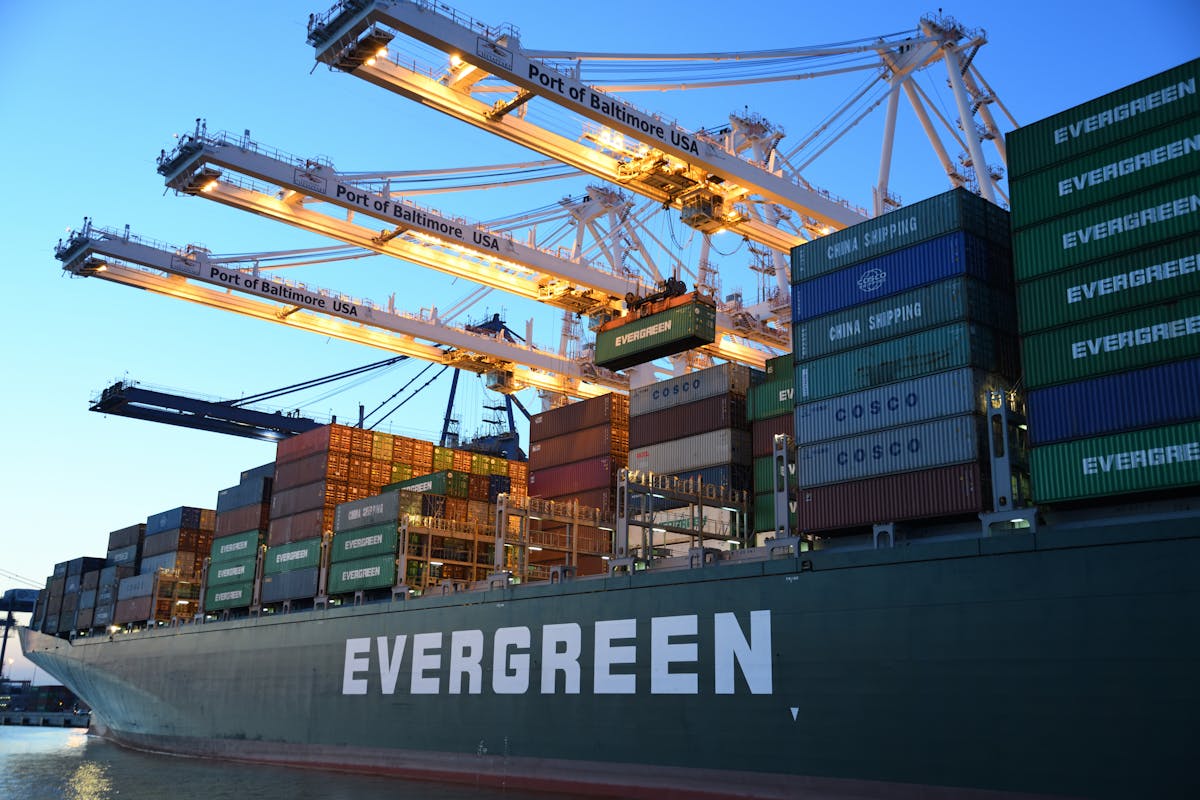
This is not a simple import substitution. A wheel set with a different steel grade or a brake valve with different response characteristics may require changes to maintenance intervals, inspection procedures, and depot equipment. The standard does not merely block the old supplier; it forces the operator to revalidate a larger technical system. In port operations, similar issues arise with crane components, spreader systems, and automated stacking equipment. A replacement drive or sensor may be functionally similar but not covered by the original safety case or type approval documentation.
Metrology and Verification as a Hidden Cost
Metrological verification is another layer. Flow meters, pressure transmitters, weighing systems, and temperature sensors used in commercial or safety-related applications must be verified against Russian measurement standards. When a plant changes suppliers, the new instruments must be entered into the state register of measuring instruments or covered by an existing type approval. If the instrument is not registered, it cannot be used for commercial accounting, custody transfer, or certain safety functions.
For oilfield service companies and pipeline operators, this creates a specific barrier. A non-sanctioned flow meter from an Asian supplier may be cheaper and available, but if it lacks Russian type approval, the operator must either pay for a lengthy approval process or use it only in non-commercial applications. The standard thus segments the market: some equipment can be substituted quickly, while other equipment remains tied to a shrinking pool of approved suppliers.
Regional and Sectoral Variation
The burden of technical standards is not uniform. It varies by sector, region, and the specific regulatory regime involved.
Metallurgy and Pressure Equipment
Steel plants and non-ferrous metallurgy facilities operate under strict industrial safety rules. Blast furnaces, converters, ladles, gas cleaning systems, and high-pressure steam lines are subject to Federal Law No. 116-FZ on Industrial Safety of Hazardous Production Facilities. Replacement equipment must pass industrial safety expertise, and the expert organization must be licensed by Rostekhnadzor. In practice, this means that a plant in Chelyabinsk or Novokuznetsk cannot simply buy a Chinese heat exchanger and install it. The design documentation, material certificates, welding procedures, and non-destructive testing records must be reviewed. If the Chinese manufacturer does not provide documentation in the expected format, the plant may need to hire an engineering firm to prepare a new technical file.
This is a market barrier with a specific regional dimension. Plants in industrial regions with established engineering service providers can manage the documentation burden more easily than plants in remote locations. A metallurgical plant in the Urals may have access to local expert organizations that understand both Russian and foreign documentation. A plant in the Far East may face higher costs and longer lead times for the same expertise.
Oilfield Services and Well Control Equipment
Oilfield service companies face standards related to well control, blowout preventers, drill pipe, and downhole tools. Many of these products were historically supplied by Western firms under API standards. Russian operators have increasingly accepted equipment certified under GOST R or EAEU technical regulations, but the transition is uneven. A blowout preventer from a Chinese manufacturer may meet API specifications but still require Russian industrial safety approval for use on a hazardous production facility. The approval process includes review of design documentation, material certificates, and factory test reports.
For service companies working in Western Siberia or the Volga-Urals region, the practical question is whether the equipment can be certified before the next drilling campaign. If not, the operator may be forced to use older, already-certified equipment, which raises maintenance costs and operational risk. The standard does not block the import; it delays the deployment.
Logistics and Commercial Vehicle Certification
Road freight and logistics companies face a different set of standards. Trucks, trailers, and refrigeration units must meet EAEU vehicle type approval requirements. Since 2022, Russian logistics firms have imported trucks from China, but the certification process for new models and modifications has not always kept pace with demand. A logistics company that buys a Chinese tractor unit may find that certain modifications, such as a Russian-made fuel tank or a locally installed telematics system, require additional approval.
This creates a market barrier for smaller logistics firms that lack in-house certification specialists. Large operators can maintain dedicated compliance staff or work with certification agencies on retainer. Smaller firms may face delays that affect their ability to win contracts. The standard thus reinforces the position of larger, better-capitalized operators, even when the underlying vehicle technology is widely available.
Unintended Consequences of Standards as Barriers
Standards are often presented as neutral technical requirements. In practice, they produce trade-offs and unintended consequences that are rarely discussed in official policy documents.
Parallel Certification Systems and Fragmented Compliance
One consequence is the growth of parallel certification systems. A Russian plant may need a GOST R certificate for domestic use, an EAC certificate for exports to Kazakhstan or Belarus, and a separate industrial safety expert opinion for hazardous facilities. The same equipment may also need metrological verification and fire safety confirmation. Each process has its own documentation requirements, fees, and timelines. For a mid-sized manufacturer, the cumulative burden can exceed the cost of the equipment itself.
This fragmentation creates an incentive to use intermediaries and certification brokers, some of whom operate in a legal gray zone. A plant may pay a broker to obtain a certificate without fully understanding whether the certificate will be accepted by Rostekhnadzor or a specific customer. The result is a compliance market that is opaque, unevenly enforced, and vulnerable to disputes.
Standards as a Tool for Incumbent Protection
Technical standards can also protect incumbent suppliers. When a Russian manufacturer has already certified its product for a specific application, a new entrant must bear the full cost of certification before it can compete. This is not unique to Russia, but the current environment amplifies the effect. With limited access to Western testing facilities and certification bodies, new entrants from Asia or the Middle East may find it difficult to complete the required tests. The incumbent supplier, even if its product is more expensive or less advanced, retains a structural advantage.
This is particularly visible in the market for industrial pumps, compressors, and valves. Russian manufacturers that obtained certificates years ago can continue to sell into the domestic market, while foreign alternatives face a lengthy approval process. The standard does not explicitly prohibit competition, but it raises the entry cost to a level that discourages many potential suppliers.
Safety Trade-Offs and Documentation Gaps
There is also a safety dimension. When certification lead times are long, some operators may choose to operate equipment without full documentation or to extend service intervals beyond approved limits. This is not a hypothetical risk. In sectors with tight maintenance budgets and limited access to spare parts, the pressure to keep equipment running can override formal compliance. A plant manager may decide that a non-certified replacement part is acceptable because the alternative is a prolonged shutdown. The standard, intended to ensure safety, can paradoxically encourage informal non-compliance when it becomes too burdensome.
This trade-off is rarely acknowledged in official discussions. Regulators emphasize the importance of compliance, while operators focus on continuity. The gap between the two perspectives is a structural feature of the current environment, not a temporary anomaly.

Policy Instruments and Firm-Level Responses
Russian authorities have introduced several policy instruments to address the certification bottleneck. These include accelerated conformity assessment procedures, recognition of foreign test reports in certain cases, and simplified rules for products imported from specific countries. The effectiveness of these measures varies by sector and product category.
Accelerated Certification and Its Limits
In some product categories, certification bodies have been authorized to issue certificates based on document review rather than full testing. This is common for low-risk electrical equipment and certain mechanical components. For high-risk equipment, such as pressure vessels, lifting devices, and well control equipment, full testing and industrial safety expertise remain mandatory. The acceleration therefore helps with simple substitutions but does little for the most critical equipment categories.
Firms have responded by building internal compliance capacity. Large metallurgical and oilfield service companies now maintain teams that specialize in EAEU technical regulations, industrial safety expertise, and metrological verification. These teams work with certification bodies on a continuous basis, pre-qualifying alternative suppliers before a specific need arises. This is a rational response, but it requires resources that smaller firms do not have.
Supplier Pre-Qualification as a Competitive Advantage
Some Russian industrial firms have begun to treat supplier pre-qualification as a strategic function. Instead of waiting for a component to fail and then searching for a certified replacement, they maintain a list of pre-approved suppliers whose products have already passed the relevant certification. This reduces downtime and gives the firm a stronger position in price negotiations. It also creates a barrier for new suppliers, who must complete certification before they can even be considered.
This practice is common in the rail sector, where operators maintain approved supplier lists for brake components, wheel sets, and electrical equipment. A new supplier must pass type approval and demonstrate compatibility with the operator’s existing fleet. The process can take a year or more, which effectively locks in existing relationships.
Regional Certification Hubs and Service Providers
Another response is the emergence of regional certification hubs. Cities with strong engineering traditions, such as Yekaterinburg, Chelyabinsk, Novosibirsk, and Kazan, have seen growth in firms that specialize in preparing technical files, coordinating with certification bodies, and managing industrial safety expertise. These firms act as intermediaries between manufacturers and regulators, and their services are in high demand.
For a plant in a remote region, the availability of such services can determine whether a substitution project is feasible. A plant in Norilsk or Magadan may need to fly in experts or ship documentation to a regional hub, adding cost and delay. The geography of certification services thus becomes part of the geography of industrial adaptation.
What This Means for Operational Planning
For firms operating in Russian heavy industry and logistics, technical standards should be treated as a first-order operational constraint, not a back-office compliance issue. The following practices are becoming standard among firms that manage this constraint effectively.
Map certification requirements before supplier changes. A substitution project should begin with a review of the applicable technical regulations, industrial safety rules, and metrological requirements. This review should identify which certificates are needed, which bodies can issue them, and how long the process is likely to take.
Maintain a pre-qualified supplier list. Firms that pre-qualify alternative suppliers reduce the risk of downtime when a primary supplier becomes unavailable. Pre-qualification should include not only technical evaluation but also a review of the supplier’s ability to provide documentation in the required format.
Budget for certification costs as part of procurement. The cost of certification can be significant, especially for high-risk equipment. Procurement budgets should include line items for certification, industrial safety expertise, and metrological verification. Treating these as incidental expenses leads to delays and budget overruns.
Monitor regulatory changes at the EAEU level. Technical regulations are revised periodically, and the Eurasian Economic Commission issues clarifications and amendments. Firms that monitor these changes can anticipate new requirements and adjust their compliance strategies before a regulation takes effect.
FAQ
Why do technical standards create market barriers even when tariffs are low?
Technical standards create market barriers because they impose mandatory certification, testing, and documentation requirements that are independent of tariffs. A product can enter a country duty-free but still be unusable if it lacks the required certificate, type approval, or industrial safety expert opinion. The cost and time required to obtain these approvals can be higher than the tariff itself, and the process may be controlled by domestic bodies that are not accessible to all foreign suppliers.
How do Russian firms handle certification when a Western supplier is no longer available?
Russian firms typically identify an alternative supplier from China, India, Turkey, or the domestic market, then initiate a certification process under the relevant EAEU technical regulation or industrial safety rule. This may involve document review, testing, and expert evaluation. Large firms often maintain internal compliance teams and pre-qualified supplier lists to reduce lead times. Smaller firms may rely on regional certification service providers or brokers, which introduces additional cost and risk.
Are accelerated certification procedures available for all product categories?
No. Accelerated procedures are generally available for lower-risk products, such as certain electrical components and mechanical parts. High-risk equipment, including pressure vessels, lifting devices, and well control equipment, still requires full testing and industrial safety expertise. The acceleration therefore helps with simple substitutions but does not remove the barrier for the most critical equipment categories.
What is the difference between GOST R and EAC certification?
GOST R is a national Russian certification system, while EAC certification applies to the Eurasian Economic Union, which includes Russia, Belarus, Kazakhstan, Armenia, and Kyrgyzstan. A product with an EAC certificate can be sold in all EAEU member states, while a GOST R certificate is valid only in Russia. Some products require both, depending on the application and the customer’s requirements.
How do standards affect smaller logistics and industrial firms differently from larger ones?
Larger firms can maintain dedicated compliance staff, pre-qualify suppliers, and absorb certification costs as part of normal procurement. Smaller firms often lack these resources and may face longer delays, higher relative costs, and greater dependence on intermediaries. Standards thus tend to reinforce the position of larger, better-capitalized operators, even when the underlying technology is widely available.
Next Steps for This Publication
This article is part of a broader series on non-financial barriers to industrial adaptation. A natural follow-up would examine the role of industrial safety expertise as a specific bottleneck in metallurgy and oilfield services, including the licensing of expert organizations and the regional distribution of expertise. Another possible angle is the interaction between metrological verification and commercial accounting in pipeline operations and rail freight. Readers with direct experience in certification backlogs or supplier pre-qualification are invited to submit questions or case observations for a future column on firm-level compliance practices.