An industry association is cheap furniture in good years. Nobody reads the minutes, nobody questions the dues, and the annual congress doubles as a long lunch. Difficult years are different. Since 2022, Russian heavy industry and logistics have been running the difficult-years version of the experiment, and the results are unusually legible: a key rate that moved from 9.5 to 20 percent over the last weekend of February 2022, an 80 percent foreign-currency surrender requirement, SWIFT cutoffs for the main transaction banks, export controls on everything from bearings to CNC machines, and, by mid-2024, banks in third countries refusing payments that had cleared without incident for a year.
No single plant solved any of that alone. Parts of it were solved, partly, by associations: the Russian Union of Industrialists and Entrepreneurs (RSPP), the Chamber of Commerce and Industry (TPP), the sector unions, and the road carriers association. This article itemizes what they actually delivered for metallurgy, machinery, chemicals, shipbuilding and logistics after February 2022 â and what they cost, because the dues line is real and the trade-offs are not printed in the membership brochure.

What business associations actually do when conditions turn hostile
In a functioning market, an association is mostly a signaling device: it publishes positions, hosts forums, runs awards. When the market stops functioning, four jobs matter more than the rest.
- Information pooling at speed. Which banks still clear yuan. Which customs posts accept which valuation documents. Which ports take fertilizer and which quietly refuse it. In March 2022 this was the only market intelligence many firms had that was worth anything.
- Representation in rule-making. The RSPP bureau sits across the table from the prime minister several times a year; Delovaya Rossiya and Opora work their own lanes; sector committees write the position papers on draft decrees. Sometimes this changes the text of a rule. More often it changes the implementation memo, which matters more.
- Paperwork. TPP regional chambers issued thousands of force majeure certificates in the spring of 2022. Certificates of origin for rerouted exports. Arbitration at the ICAC for contracts that stopped being performable. None of it is glamorous. All of it kept penalty clauses from detonating.
- Coordination short of collusion. Matching idle capacity with unmet demand through a neutral desk instead of through bilateral calls that would read as a cartel. The Federal Antimonopoly Service watches this line closely, and associations have been fined for stepping over it â more on that below.
The 2022 shock, in numbers
A short chronology, because the numbers explain the demand for collective action better than any theory does.
- February 28, 2022: the key rate goes to 20 percent; exporters are ordered to surrender 80 percent of foreign-currency revenue.
- March 2022: the government publishes its list of unfriendly states; Presidential Decree No. 95 makes obligations to creditors from those countries payable in rubles. Russian banks start getting cut out of SWIFT.
- April 2022: the EU steel import ban takes effect with a wind-down period. The heavy-truck market will end the year down roughly 60 percent.
- Late March and April 2022: Government Decree No. 506 legalizes parallel imports; the Minpromtorg list follows within weeks, a few hundred product categories at first publication, drafted with direct sector input and trimmed repeatedly afterwards as domestic output returned.
- September 2022: Presidential Decree No. 618 authorizes markup caps on re-imported sanctioned goods; FAS works out the methodology with industry working groups. Legalization came with a price tag.
- 2023 to 2024: the key rate falls to 7.5 percent by autumn 2022, then climbs back â 16 percent by December 2023, 21 percent by October 2024. Capital gets scarce on purpose.
Against that backdrop, the currency surrender rule was softened to 50 percent by June 2022 and scrapped by autumn. The softening followed months of organized complaints, with industry associations among the loudest voices. That is the mechanism in miniature: not victory, but a negotiated retreat from the harshest parameter.
Sector evidence: where associations moved the needle
Metallurgy â losing the EU from Chelyabinsk to Lipetsk
The EU ban removed the highest-margin export market in a single quarter. Severstal redirected flat-steel volumes to Turkey, the Middle East and Asia within roughly two quarters; NLMK and MMK worked similar routes through Baltic and Black Sea ports. The sector’s own lobby, the Russian Steel association, wound down during 2022, and metallurgy representation consolidated inside RSPP’s industrial committee â fewer letterheads, one direct line to the government.
The trade-off is visible in the minutes. Committee agendas follow the members who fund them: the majors set the priorities, and smaller rerollers in Chelyabinsk, Yekaterinburg or Kemerovo get the newsletter rather than the microphone. Consolidation bought access and sold diversity of voice.
Machinery â Naberezhnye Chelny and the component squeeze
The Russian heavy-truck market fell by roughly 60 percent in 2022. KAMAZ and its peers rebuilt component supply through intermediaries in the EAEU, Turkey and the Emirates, and the machinery associations â RosSpetsMash among them â spent that year pressing for customs clarifications and warranty relief on parallel-imported parts. They got partial answers, which is the normal result. Machine tools tell the cleaner story: China became the dominant supplier within about a year, and the associations’ practical contribution was valuation and certification practice around that flow, not import substitution itself. Anyone claiming the sector rebuilt its machine-tool base in 24 months is selling something.
Chemicals and fertilizers â losing the Baltic, keeping the volume
The TolyattiâOdesa ammonia pipeline shut in February 2022 and has not reopened. Acron, Phosagro and Uralchem rerouted volumes through St. Petersburg, Murmansk and Novorossiysk; Uralchem bought a controlling stake in the Latvian ammonia terminal at Ventspils in 2023 to keep an outlet. Sector unions pushed port and rail capacity, transport subsidies for fertilizer logistics appeared during 2022, and priority rail quotas followed. The result is split: fertilizer exports recovered; ammonia exports stayed structurally broken. An association can move cargo to a different port. It cannot rebuild a pipeline.
Logistics â permits, insurance and the queue for the East Polygon
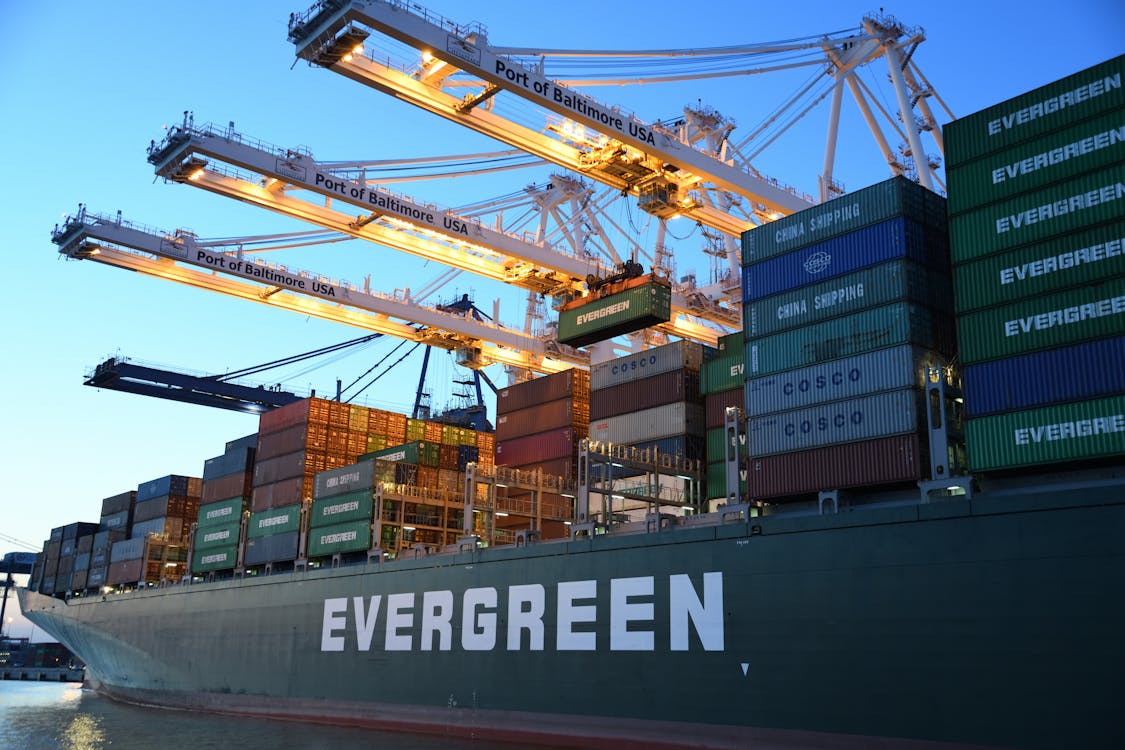
The IRU suspended Russian membership in March 2022, which killed ECMT permits for international road haulage. ASMAP rebuilt bilateral permit exchanges with Turkey and Central Asian partners and negotiated domestic insurance after the European carriers’ clubs withdrew. In shipping, the FAS liner registry of 2022 restabilized container calls after three major lines pulled out. On rail, the East Polygon modernization â its second stage approved in late 2022 at roughly 700 billion rubles, capacity officially targeted toward 180 million tonnes â created the harder problem of who gets the wagons. Allocation rules for coal and steel exporters were negotiated between the carrier and the industries’ committees, and queue discipline mostly held.
The North-South corridor through Astrakhan shows the same pattern now: volumes still small against the VladivostokâMoscow flow, growth running double-digit, and the working route intelligence â which transshipment points actually function, which insurers actually pay â circulating through forwarders’ associations faster than through any official bulletin.
Shipbuilding â Bolshoy Kamen and the insurance gap
Foreign equipment suppliers withdrew from the Zvezda yard complex in 2022, and delivery schedules slipped. The sector’s fastest practical fix was not engineering but paperwork: international P&I clubs stopped covering Russian-owned tonnage in March 2022, a domestic mutual backed by the national reinsurer filled part of the gap from 2023, and the associations’ job was standardizing clauses until third-country ports accepted the certificates. That is association-shaped work. No single shipowner could have written a market standard alone.
Defense suppliers â the League and the banks
Defense-industrial suppliers, especially the smaller tier, found banks refusing credit lines in 2022 and 2023 out of compliance caution. The League for Assistance to Defense Enterprises intermediated between the two sides, and conscription-deferment paperwork after the September 2022 mobilization order was standardized at enterprise level with associations doing the sorting. This lane is the least documented and the most politically constrained, which is exactly why the intermediary exists: someone has to be a neutral address for both the bank and the plant.
Five mechanisms that justify the dues
Stripped of conference season, here is what membership actually bought since 2022.
- Force majeure at scale. TPP chambers issued thousands of certificates within weeks in spring 2022. A template, a turnaround time, a document a counterparty’s lawyer would accept. Firms without it ate penalties.
- Payment corridors. The yuan became the main settlement currency for imports within two years. Rupee balances accumulated in India â reported in the tens of billions of dollars with nowhere to go. From spring 2024, Chinese banks began refusing payments outright. Associations compiled refusal cases, handed them to the central bank and to alternative correspondent chains, and pushed settlement into currencies that still cleared; message traffic on the domestic financial messaging system multiplied. What no association could do: force a third-country bank to accept a transfer it did not want. That constraint stands.
- Regulatory relief with a price tag. Parallel imports under Decree No. 506 came with markup caps under Decree No. 618 and customs valuation scrutiny. The 2023 excess-profits tax kept its 10 percent headline but arrived with an early-payment option that halved it, after months of argument in which business associations were the arguing side. Every relief since 2022 has come bundled with a reporting obligation.
- Access to rationed capital. The Industrial Development Fund lends at 1â5 percent; industrial mortgage under Government Decree No. 858 of May 2022 runs at 3â5 percent on loans up to 5 billion rubles for building or buying production space; the technological-sovereignty project portfolio announced in early 2023 was officially sized above a trillion rubles in its first wave. Quotas run out early. Associations run application clinics and pre-screening, which raises approval odds more than any brochure will admit. At a 21 percent key rate, even 5 percent money is tight, and collateral demands climb with every hike.
- People. Official estimates put the economy-wide worker shortfall above two million in 2024, with unemployment near 2.3 percent. Associations pooled retraining programs, standardized deferment lists in autumn 2022, and published wage benchmarks carefully enough to stay on the right side of the antitrust rules â mostly.
The costs and trade-offs nobody prints in the brochure
- Dues scale with revenue. For a mid-size industrial firm, annual membership runs from hundreds of thousands of rubles into the millions, before event fees. Most large firms hold two or three overlapping memberships as insurance, and they know it.
- Big-firm bias. Committees follow the money. The agenda is set by the largest members; the smaller ones ratify it.
- Free riders. Payment corridors, permit regimes and markup methodologies benefit the whole sector. Only members pay for them.
- Gatekeeping. Access to ministries runs through a handful of secretariats. That concentrates influence in very few hands, and an outsider with a real problem can wait behind a member with a fake one.
- Overlap. RSPP, Delovaya Rossiya, Opora, TPP, the sector unions: duplicated events, occasionally contradictory positions, and a standing temptation to mistake attendance for influence.
- Antitrust exposure. FAS has fined associations more than once for price signaling. The line between information exchange and coordination is thin, and the fine lands on the firm, not the secretariat.
- Speed. In spring 2022, rules changed weekly and association circulars arrived days late. Firms that relied on them exclusively lost time. The good ones treated the circular as a checkpoint, not a feed.

How to tell whether an association earns its dues
A five-point test a plant director can run in an afternoon.
- Ask for the record on named instruments: the Decree 506 list, the Decree 618 methodology, FRPP quotas, deferment lists. If the answer is a conference program, stop there.
- Count the staff with ministry, customs or central-bank backgrounds. Working phone numbers matter more than mission statements.
- Test service speed on one small problem â a certificate of origin, a customs valuation query â before signing anything multi-year.
- Check whether the committee structure covers the supply chain, not just the product. A steel plant lives and dies by rail and port committees.
- Read the position papers from 2022 and 2023 and compare them with what actually changed. Associations that claim every victory influenced few of them.
Frequently asked questions
Which business associations matter most for Russian heavy industry and logistics?
RSPP for the umbrella and the sector committees; TPP for certificates, origin documents and arbitration; the sector unions â machine-builders, chemists, the RSPP metallurgy committee â for vertical detail; ASMAP for international road carriers; Opora for smaller firms. A large industrial firm typically holds two or three memberships at once, which is redundancy, not waste.
What did associations actually change between 2022 and 2024?
The parallel-import list took sector input and it shows: a few hundred categories at first publication, trimmed later as domestic output returned. The currency surrender rule was softened within months. The 2023 excess-profits tax kept a 10 percent headline but carried an early-payment option that halved it. Force majeure paperwork scaled to demand in weeks. None of it was charity, and all of it was negotiated.
Can an association solve sanctions-related payment problems?
Partly, and the honest limit matters. Associations compiled refusal cases, brokered alternative correspondent chains, and pushed settlement into currencies that still cleared. The binding constraint is the risk appetite of banks in third countries, and no amount of domestic lobbying repeals that.
Is membership worth it for a mid-sized plant?
Run the arithmetic on three services: paperwork and certificates, capital-access pre-screening for FRPP and industrial mortgage programs, and payment-route intelligence. If the plant imports components or exports output, the paperwork alone usually covers the dues. A purely domestic firm with domestic suppliers has a weaker case, and a lower-tier membership is the rational choice.
The bottom line
Easy environments reward independence. Difficult ones reward pooled information, standardized paperwork, and someone whose full-time job is to sit across the table from the ministry. Since 2022, Russian heavy industry has been paying for exactly that, itemized: dues, duplicated memberships, agendas set by the largest members, relief bundled with reporting obligations. Most firms keep paying. That is the tell.