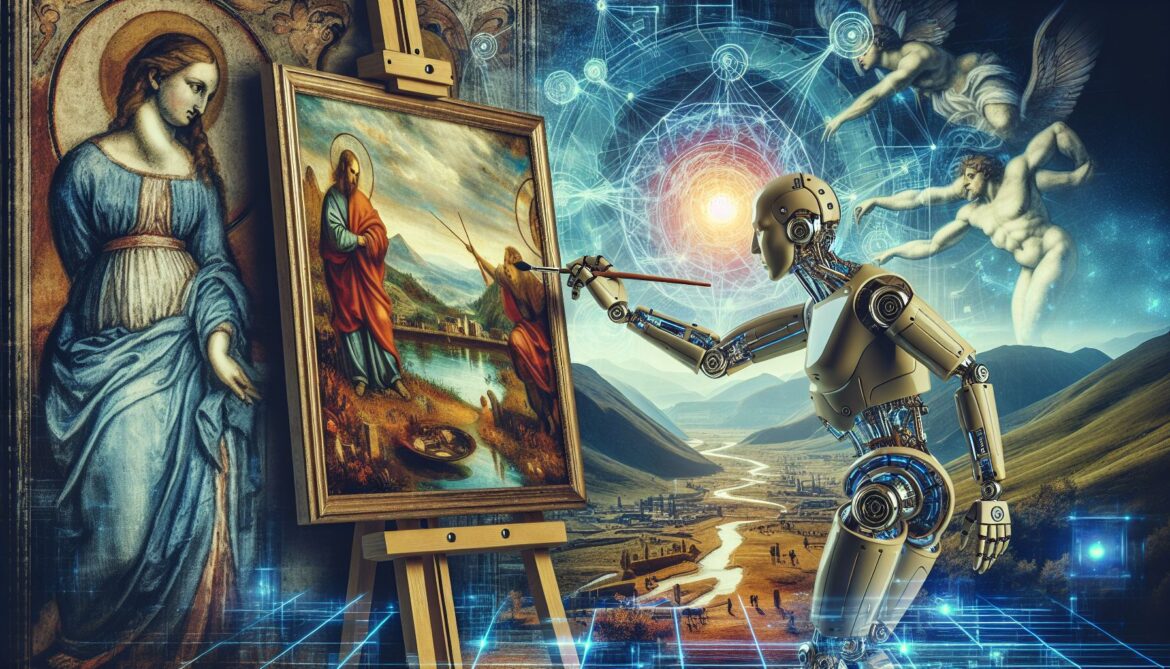
Hey, lovely nerds and art aficionados! Today, let’s explore the weird and wonderful world where Artificial Intelligence crashes into the creative arts. Picture a Picasso holding hands with an algorithm, painting a masterpiece together. Sounds far-fetched? Well, AI is shuffling the deck, creating a tech-fueled renaissance where bytes and brushes collaborate like never before.
Artistry Meets Algorithms
When I first heard about AI crafting music, I admittedly rolled my eyes—surely not every tech launch needed to be sold to us with a creative punchline! Skepticism aside, the initial AI tunes and visual art pieces had all the soul of a dial-up modem. But oh, how they’ve changed! Fast forward to today, AI-generated art is causing a major shift, challenging us to rethink what creativity actually means.
It’s not just about teaching machines to copy art. It’s like watching an infant Picasso or Möbius grow up in a data-centric world. Imagine an AI artist that can tap into every piece of art ever created—combining aesthetics in ways we never expected. There’s something genuinely fascinating about watching an AI create original works, breathing life into pixels through patterns it learned and mixed in ways even the original artists might not have imagined.
The Frankenstein Factor
Now, some of you might be having a Frankenstein moment, worried about machines taking over the creative realm as they crunch their circuits. But if there’s one thing history teaches us, technology usually creates more collaboration than competition. AI in creative arts isn’t replacing human creativity. It’s amplifying it.
Look at Michaelangelo—imagine him having access to AI tools. The dude could have painted eight times the Sistine Chapel! A new breed of artists armed with AI is pushing the boundaries. I like to call them Alphagenius Creatives! Think about it: AI can handle the tedious bits, letting artists focus on high-level creativity. The debate shouldn’t silence creativity but spark conversations about authorship, innovation, and collaboration.
The Canvas of Possibility
AI art may not carry the heartache of van Gogh or the joy of Matisse, but it brings a different kind of beauty. Artists today can use AI as their co-pilot, a brush that doesn’t sleep, doesn’t judge, and learns with every interaction—something Leonardo da Vinci in his time could only dream of.
Take a look at Refik Anadol, an artist using machine intelligence to create mind-bending installations that blend physical and virtual realities, basically transforming data into paint. It’s a visual symphony, a dynamic dance where human intuition and machine algorithms move like partners on a digital dance floor.
The Algorithms of Melody
Okay, so visual arts are transformed, but what about music? The world of AI-generated music is one big raucous electronic orchestra. Google’s Magenta is one project that’s paving the way, working to expand the potential of art and music creation using machine learning.
Remember the Beatles? Now, imagine them collaborating with an AI composer creating symphonies of unprecedented richness. Want dystopian electronic beats? Ask an AI Mozart. Crave some ‘Classical Bach meets Dubstep’? AI’s got you covered.
The idea isn’t to replace artists but to democratize creativity. The goal is to make artistry accessible, blurring the lines between composer and consumer, allowing anyone with a passing interest to dip a toe in the sonic pool and learn to play.
The Future’s Palette
So, where does all this AI creativity lead us? While we’re still in the early chapters, the dynamic canvas painted by AI has untapped potential. We might just be approaching a breakthrough where AI can create custom creative experiences—for entertainment, education, or even mental health support.
Imagine visiting an art gallery where the art reacts in real-time to your mood, or a playlist that adjusts to your emotional state during the day. What if AI could preserve the style of legendary artists, creating new masterpieces long after they’re gone, or adaptation AI that changes stories in real-time based on audience feedback?
A New Era Awaits
Is it a utopia, or is this yet another step in our march toward an advanced synthesis between human intuition and machine power? Only time will tell—and maybe a few line breaks in the code. While there’s still much debate on originality and ethics, the potential for AI’s role in creative arts is as vast as our imagination allows.
In the end, whether you’re sketching on paper or creating data harmonies with an AI collaborator, there’s a shared goal—a grand creation woven from the threads of possibility. Art is changing, and AI is an important piece in this puzzle. Lean into it, dear friends—our century’s Mona Lisas await.