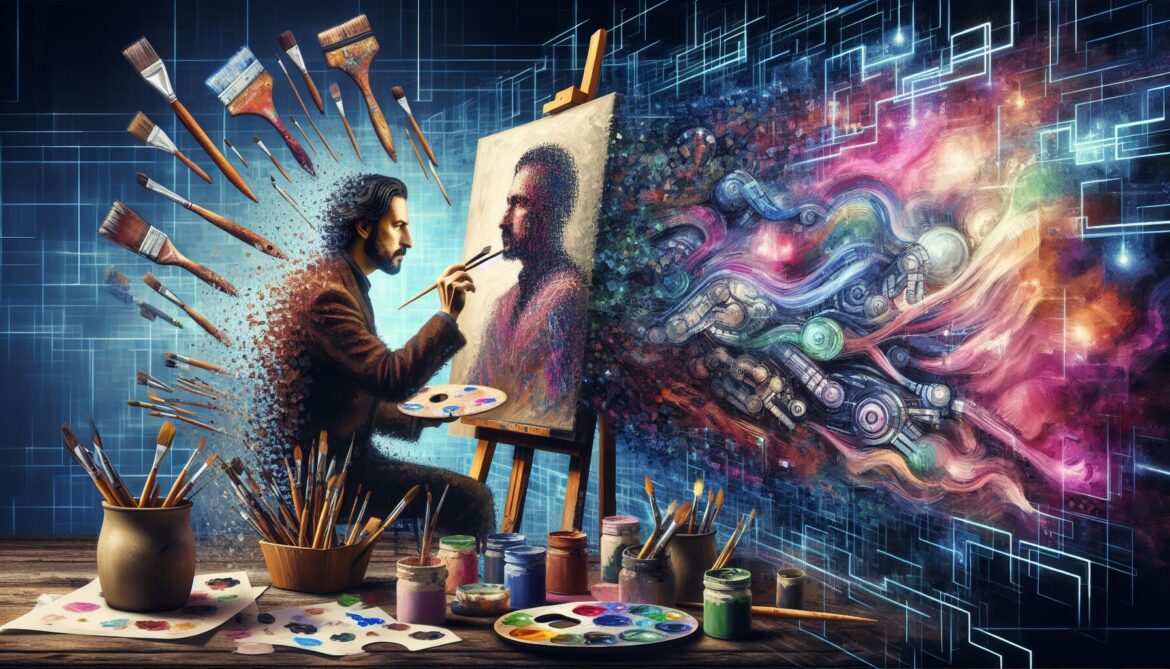
Hey, tech enthusiasts! If you’ve been watching the tech space (even a tiny bit) over the last decade or so, you might’ve noticed the incredible ways AI is sneaking into every corner of our lives. From your smartphone’s voice assistant that never quite gets your accent right to self-driving cars that are getting less crazy by the minute, AI is everywhere. But while you might have heard about AI’s impact on industries like healthcare, finance, or transportation, today, I want to take you on a journey through a more unexpected domain: creative arts.
That’s right, AI isn’t just crunching numbers and optimizing industrial workflows, it’s picking up a metaphorical paintbrush and experimenting with artistic expression. As someone who’s fascinated by both tech and art, I’m super excited to explore how AI is changing the creative world. So, grab a cup of coffee, and let’s see what happens when silicon meets creativity.
AI: The New Artist on the Block
Let’s kick things off by looking at how AI is making a splash in the world of visual arts. Companies like DeepArt and RunwayML have developed algorithms that can generate artworks that could pass as creations of human artists who lived centuries ago. Their secret? Neural networks trained on thousands of works by famous painters.
Remember when Google’s DeepDream was all over your newsfeed with its trippy, dream-like visuals? That was just the beginning. Today, AI is producing complex, layered art that goes beyond psychedelic swirls and colors. Take the works created by GANs (Generative Adversarial Networks). If you’re not familiar with GANs, imagine two neural networks at a paint-off: one creates art and the other acts as a critic. Over time, they push each other to produce works that are increasingly sophisticated. The result? Art that’s both original and eerily reminiscent of the human touch.
Music to My (Digital) Ears: AI Composing Symphonies
Visual art isn’t the only space where AI is flexing its creative muscles. Let’s tune in to the world of music.
AI-driven music composition has taken off with companies like OpenAI (remember their GPT series?) and Amper Music leading the charge. These platforms are creating musical scores that can evoke emotions and complement multimedia projects. You’ve probably heard AI-composed music in commercials or indie films, and if you hadn’t been told, you’d likely have thought it was the work of a traditional composer.
Sure, AI-generated music can sometimes sound a little like a robot trying its best to impersonate a ’60s garage band, but sophisticated systems like Jukedeck and AIVA are learning fast. With each run-through, these algorithms are getting better at creating music that’s not just melodically coherent but also impressive in its emotional depth.
Storytelling in the AI Age
Writing is another area where AI is starting to leave its mark. Ever used Grammarly to clear up your typos? Well, that’s one way AI is helping writers. But what about AI taking the pen itself?
Narrative platforms powered by AI, such as OpenAI’s GPT-3, are getting better at writing everything from poetry to short stories. Some authors are even using these tools to overcome writer’s block, letting AI draft sections of their novels. Fun fact: One sci-fi author famously co-wrote a book with an AI, effectively turning it into a digital co-author.
Now, before you start panicking about AI replacing J.K. Rowling, while AI’s linguistic capabilities are impressive, the subtleties of human emotion and complex ideas remain elusive to our silicon friends. For now, think of AI as a handy research assistant rather than a creative mastermind.
Implications: The Good, the Bad, and the Intriguing
With AI making such creative strides, we have to step back and consider what this means for the future of art and creativity. Here are some thoughts buzzing around my mind:
-
Accessibility: AI tools democratize art creation by lowering barriers to entry. Anyone can dabble in painting, composing, or writing with a little help from AI, even if they have zero training in these fields.
-
Co-Creatorship: We’re already seeing collaborations between humans and AI where new, hybrid art forms emerge. Could this lead to an evolution in the definition of what constitutes “art”?
-
Authenticity Tug-of-War: There’s an ongoing debate about whether AI-generated works can be considered truly “original” or whether they’re just derivative copies. Personally? I think new definitions of creativity might arise from this digital world.
The Road Ahead: Speculating on the Creative Future
Looking ahead, it’s fun to imagine a world where AI and human artists work alongside each other. What if AI could personalize art specifically catered to your emotional state or the room you’re sitting in? Imagine listening to a playlist curated on-the-fly to lift your mood or viewing a painting that’s digitally tailored to evoke specific feelings.
While this techno-utopian vision might sound like a scene from a sci-fi flick, remember, we’re talking about a field that’s advancing at breakneck speed. Every day, new breakthroughs are pushing the boundaries of what’s possible.
Wrapping Up: The Beautiful Intersection of Technology and Creativity
The integration of AI into creative arts is like that surprise plot twist in a novel. You didn’t see it coming, but it totally makes sense. Though we’re still in the early chapters of this story, it’s clear that AI is transforming how we define and experience art.
So, next time you ponder the future of creative arts, take a moment to appreciate this fascinating fusion of tech and creativity working behind the scenes. It reminds us that art, in all its forms, is not just about the output but about the journey, the unexpected sparks of inspiration that lie around each bend.
Thanks for sticking around to explore this with me! I can’t wait to see what happens next and hear how you think AI will shape the world of creativity. Until next time, keep wondering, keep creating, and stay curious!