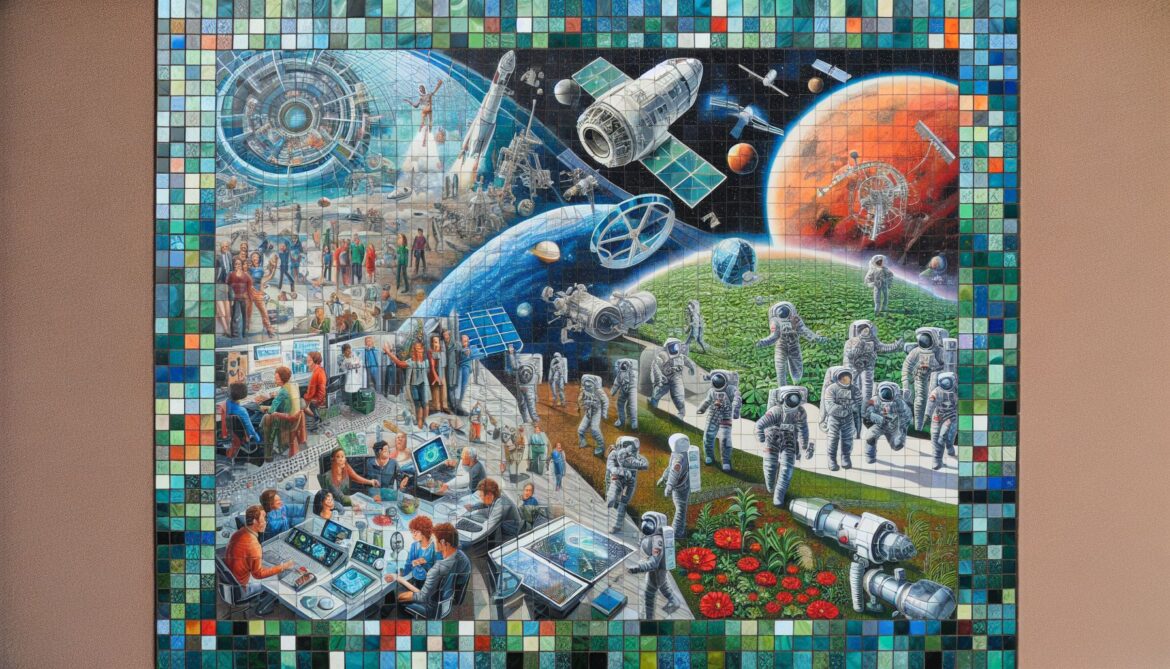
Hey there, space nerds and curious humans! The cosmos is calling, and honestly, I’m ready to answer that interstellar phone. Today, we’re talking about space travel, which has gone from sci-fi fantasy to something that’s actually happening right now.
Lift Off: A Historical Leap
Let’s start with history. When Neil Armstrong took that “small step,” it was huge. But here’s what blows my mind: it was just the beginning, not the end of space travel. The Apollo missions inspired generations and lit this cosmic fire in all of us. But after decades of waiting for a sequel to the moon landing, the space industry has completely transformed. Gone are the days when it was just stuffy government programs. Now we’ve got private companies doing wild stuff with incredible technology.
Companies like SpaceX, Blue Origin, and Rocket Lab aren’t just aiming for the stars anymore. They’re actually building ways to live among them. “Space tourism” doesn’t sound crazy anymore. It sounds like something I might actually save up for. I’m here for a future where my vacation options include “Mars retreat” or “weekend on the moon.”
Space Is Becoming Mainstream
Remember when SpaceX launched that red Tesla into space with Starman jamming to Bowie? What a moment. That wasn’t just cool marketing. It showed how space travel has shifted culturally. Space isn’t just for astronauts and astrophysicists anymore.
William Shatner went to space with Blue Origin. Regular folks flew on SpaceX’s Inspiration4 mission. The line between extraordinary and everyday is getting blurry. Sure, most of us don’t have multimillion-dollar bank accounts, but the dream of floating in zero gravity doesn’t feel impossible anymore.
The Technology Behind It All
All this exciting talk needs substance, and that substance is technology pushing every boundary we thought existed.
1. Rockets and Reusability: SpaceX has basically reinvented rocket launches. Their reusable rockets, like the Falcon 9, change everything. Think about it this way: imagine if we threw away every airplane after one flight. Insane, right? But rockets landing back on Earth to fly again? That cuts costs dramatically and makes the whole thing way more sustainable.
2. Miniaturization and Satellites: The CubeSat revolution is fascinating. We’ve shrunk massive satellites into tiny powerhouses. These little modules are revolutionizing communications, Earth monitoring, and deep space research. More capability, smaller package, lower cost.
3. AI and Robotics: Our artificial intelligence and robot friends are doing the heavy lifting. AI handles spacecraft navigation, while robotic arms and rovers explore places we can’t go yet. They’re our eyes and hands in worlds we’ve never seen.
What’s Next? The Cosmic Road Ahead
Let’s look into the future, shall we? In the vastness of space, possibilities are endless.
Colonizing Other Planets: I know it sounds like science fiction, but Mars colonization is happening. SpaceX and others are seriously planning to build colonies on Mars. It’s humanity’s ultimate backup plan: a second home among the stars, just in case Earth needs a break from us.
Resource Mining: Asteroid mining could be a trillion-dollar industry. We’re talking about harvesting water, precious metals, and building materials directly from space. The logistics are mind-boggling, but imagine rockets fueled by water mined from the moon. That’s the kind of future we’re looking at.
The Wild Idea of a Space Elevator: Here’s where things get really speculative. A space elevator would literally lift you from Earth’s surface into space. Mostly sci-fi? Yeah. Completely impossible? Maybe not, thanks to advances in nanomaterials and cable technology. It could turn Earth-to-space travel into something as routine as taking the subway.
Challenges Put Life On High Alert
Let’s not get carried away with space helmets and rose-colored visors. Space travel has some serious challenges.
1. Safety Concerns: Rockets can be unpredictable. The risk of catastrophic failure is always there, and making space travel as safe as driving to work is a massive challenge.
2. Legal and Ethical Concerns: Who owns space? How do we handle space debris, property rights, and fair practices? These aren’t just philosophical questions anymore. They’re real problems we need to solve.
3. Environmental Impact: Launching tons of metal into the sky isn’t exactly green. The carbon footprint of rockets is something we need to address if we want to explore space responsibly.
Space Travel: More Than a Trend
Despite these challenges, our push into space is becoming more than just an expensive hobby. It’s changing how we see our universe and ourselves. As we expand beyond our little blue planet, we might learn to appreciate and protect our home in ways we never have before.
So here’s to the dreamers, builders, and space enthusiasts among us. Whether we’re planning moon bases or asteroid mining operations, our future isn’t limited to one planet’s worth of potential. We’ve got a whole universe to explore.
Until next time, keep your feet on the ground and your eyes on the stars. We’re living the sequel, and honestly? It’s pretty amazing so far.