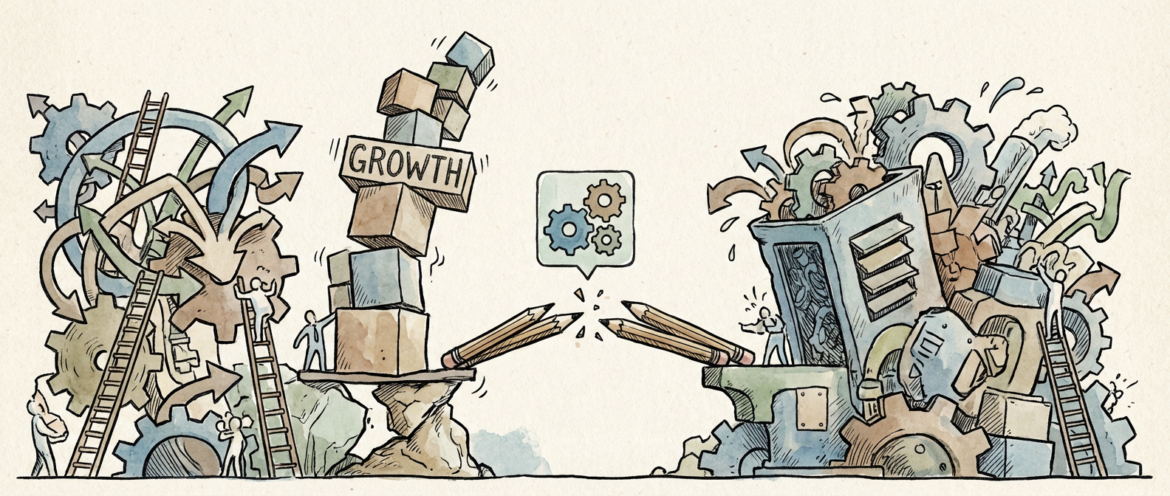
The Unsexy Truth About Organizational Growth
Every founder thinks scaling means hiring faster, raising bigger rounds, and expanding into new markets. Wrong. After analyzing dozens of scaling failures at McKinsey, I can tell you that 90% of companies approach growth completely backwards. They optimize for headlines instead of operational reality.
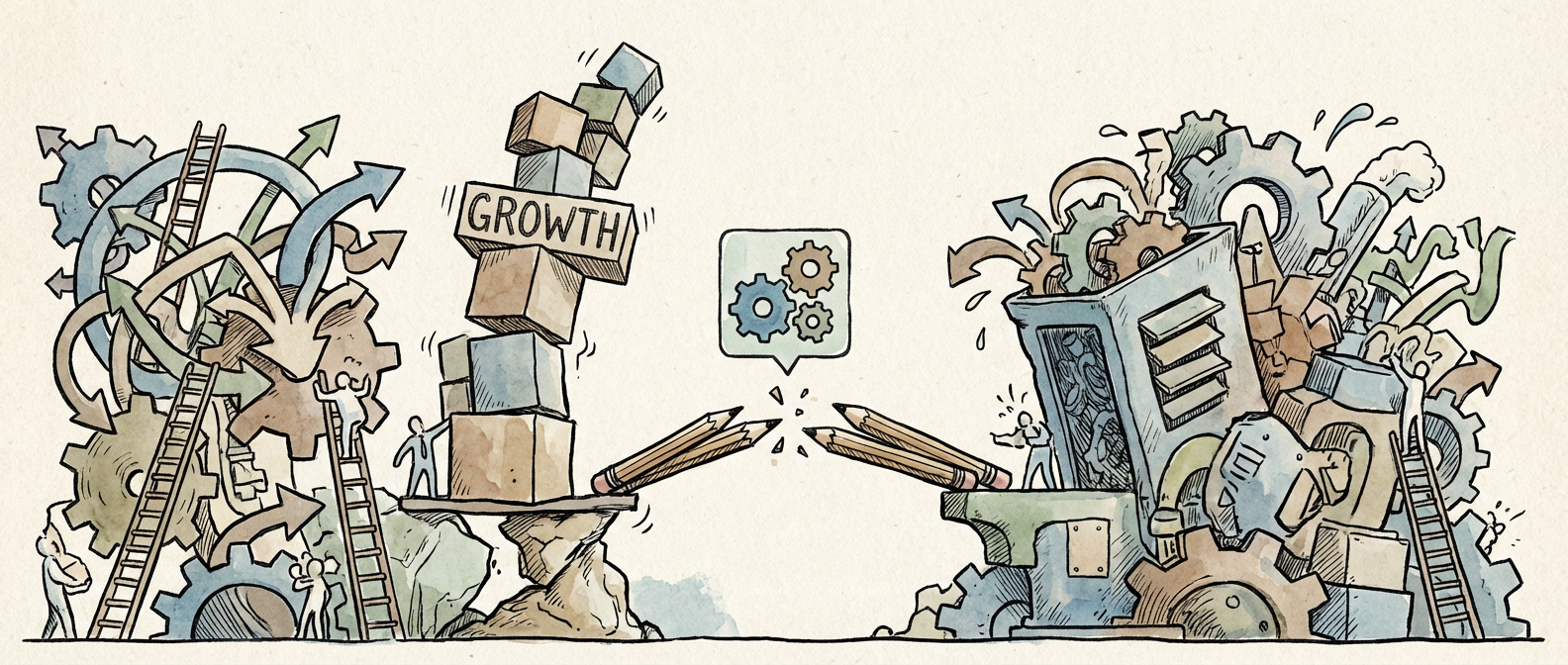
The companies that actually scale do something counterintuitive: they slow down before they speed up. While competitors burn cash on flashy growth initiatives, the real winners obsess over boring fundamentals. They build systems that can handle 10x growth before they attempt 2x growth.
This isn’t consultant theory. This is what the numbers show when you strip away the marketing spin and look at which companies are still standing after five years.

Why “People, Process, Technology” Gets It Wrong
The traditional scaling playbook tells you to focus on people, process, and technology in that order. This framework has probably destroyed more promising companies than bad product-market fit. Here’s why: it assumes your current foundation can support the weight of scale.
Smart companies flip the sequence. They start with information architecture. Before you hire your first sales rep, you need to know exactly how data flows through your organization. Who owns which metrics? How do decisions get made when the founder isn’t in the room? What happens when your customer support volume triples overnight?
I’ve seen startups with brilliant teams and solid processes collapse because they couldn’t answer basic questions about their own operations. They had 47 different spreadsheets tracking revenue, three conflicting customer databases, and no clear way to measure the ROI of new hires. Sound familiar?
The companies that nail scaling treat information systems like infrastructure. Boring? Yes. Essential? Absolutely. When Stripe was scaling from thousands to millions of transactions, they weren’t focused on hiring rock star engineers. They were building systems to track every dollar, every error rate, every customer interaction with obsessive precision.
The Hidden Killer: Decision Debt
Most scaling failures aren’t caused by external market forces or competitor moves. They’re caused by decision debt. This is the accumulation of small, expedient choices that work fine at 10 people but become toxic at 100.
Decision debt shows up everywhere. It’s the informal approval process that works when everyone sits together but breaks down across time zones. It’s the customer onboarding flow that requires manual intervention but nobody documented the steps. It’s the pricing structure that made sense for your first 50 customers but creates chaos when you hit 500.
The best scaling companies audit their decision debt ruthlessly. They identify every process that currently requires tribal knowledge or personal relationships to function. Then they replace these informal systems with scalable alternatives before they become bottlenecks.
This isn’t glamorous work. Nobody writes TechCrunch articles about companies that standardize their expense reporting. But this operational discipline is what separates sustainable growth from venture-funded theater.
The Capacity Planning Paradox
Here’s the scaling paradox that trips up most leaders: you need to build capacity before you need it, but you can’t afford to build too much too early. The solution isn’t finding the perfect balance. It’s getting comfortable with calculated overbuild in specific areas.
Focus on the constraints that hurt most when they break. Customer support response time matters more than having a fancy office. Database performance matters more than the latest marketing automation tool. Legal and compliance infrastructure matters more than every growth hack combined.
I’ve watched companies spend six months optimizing their conversion funnel while their core product crashed daily under user load. They optimized acquisition while their retention numbers collapsed. This backwards prioritization is why so many high-growth startups suddenly hit walls they never saw coming.
Smart leaders identify their true scaling constraints through data, not intuition. They measure everything that might become a bottleneck and invest ahead of demand in the areas that would cause the most damage if they failed. This means sometimes hiring your second customer success person when you could still handle the load with one. It means upgrading your servers before they slow down. It means implementing financial controls before you’re big enough to really need them.
The Compound Effect of Getting Basics Right
The most successful scaling stories aren’t about breakthrough innovations or genius pivots. They’re about organizations that make fewer mistakes than their competitors. This happens when leaders prioritize operational excellence over growth theater.
Companies that scale well have clear metrics for everything that matters to their business. They know their unit economics down to the penny. They can tell you exactly how long it takes to onboard new customers, new employees, and new features. They measure the quality of their decisions, not just their outcomes.
This measurement obsession creates a compound effect. When you know exactly how your business works, you can spot problems early and fix them cheaply. You can identify which growth levers actually move the needle versus which ones just generate activity. You can make strategic bets with confidence because you understand the downside risks.
The companies that struggle with scale are usually flying blind. They might have vanity metrics and dashboard theater, but they can’t answer fundamental questions about their business mechanics. They confuse correlation with causation, activity with progress, and growth with success.
What specific scaling challenge is keeping you up at night? I’d love to hear what you’re wrestling with and share some specific frameworks that might help.