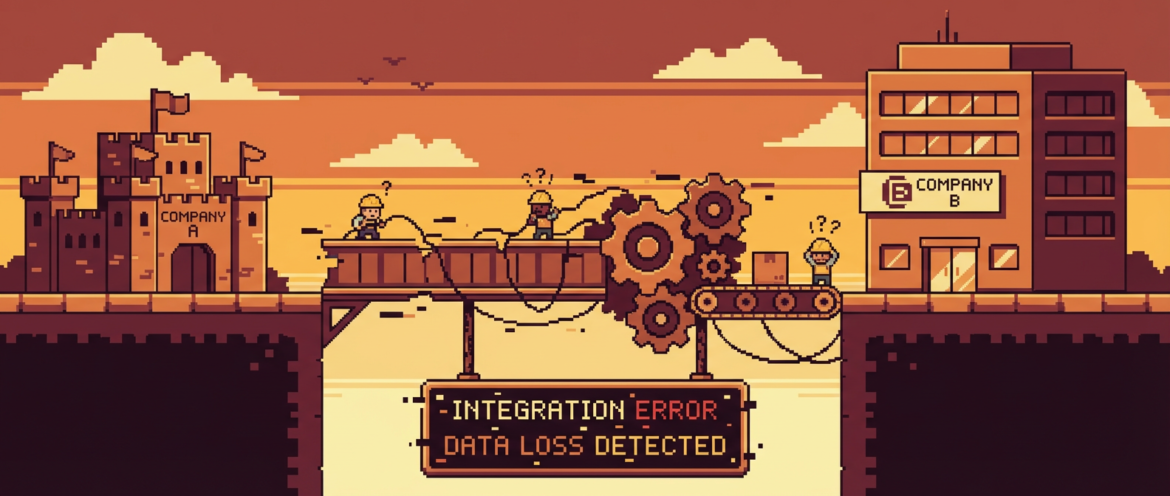
The Shiny Object Problem
Here’s what happens in 90% of acquisition announcements: executives spend months perfecting their deck about “synergies” and “strategic fit” while completely ignoring the operational nightmare they’re about to create. I’ve seen billion-dollar deals where leadership spent more time on the press release than on figuring out how to merge two different ERP systems.
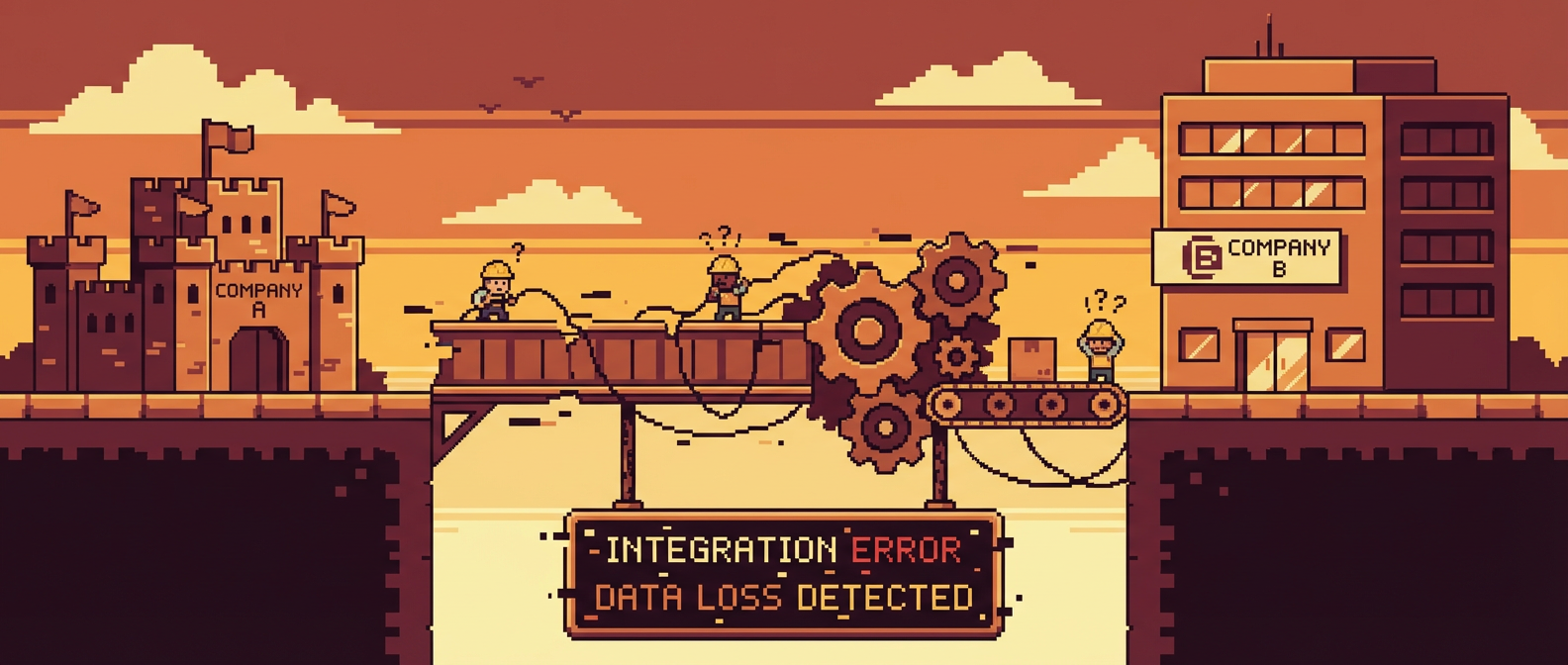
The numbers don’t lie. McKinsey’s data shows that 70% of acquisitions fail to create value, and it’s rarely because the strategic thesis was wrong. It’s because nobody wanted to do the unglamorous work of actually combining two companies. While CEOs are busy selling the vision to Wall Street, their IT departments are discovering that Company A runs on SAP while Company B uses Oracle. Somehow nobody thought to mention this tiny detail during due diligence.
The market punishes this negligence ruthlessly. Companies that mess up integration see their stock underperform by an average of 10% in the 12 months following deal closure. That’s not a rounding error. That’s shareholder value going up in smoke because leadership couldn’t be bothered with the details.

The Integration Iceberg
What you see in the deal announcement is just the tip. Revenue synergies get all the attention because they sound exciting in investor calls. “We’ll cross-sell Product A to Customer Base B and unlock $50 million in new revenue.” Sure you will.
The real work happens below the surface. In places that don’t make for sexy PowerPoint slides. How do you reconcile two different chart of accounts when one company capitalizes software development costs and the other expenses them? What happens when Company A’s sales team is used to 90-day payment terms while Company B operates on net 30? These aren’t edge cases. This is Tuesday.
I watched a $3 billion acquisition nearly implode because the acquirer couldn’t figure out how to combine two procurement systems. For six months, the newly merged entity was basically running two separate companies with a shared logo. Suppliers were getting conflicting purchase orders. Inventory was sitting in the wrong warehouses. The finance team was pulling all-nighters just to close the books each month.
The hidden costs add up fast. Integration consultants charge $500 an hour to untangle these messes. Delayed product launches cost millions in lost revenue. Employee turnover spikes as people get frustrated with broken processes. Meanwhile, competitors are quietly stealing market share while you’re distracted by your own operational chaos.
The Day One Delusion
Every integration plan I’ve ever seen has this beautiful timeline showing “Day One readiness” across all key functions. It’s complete fiction. The real question isn’t whether you’ll be ready on Day One. The real question is how long you can operate in crisis mode before something breaks permanently.
Smart acquirers plan for controlled chaos. They identify the three or four systems that absolutely cannot fail and pour resources into those. Everything else gets triaged. You don’t need perfect integration on Day One. You need functional integration that won’t kill anyone.
The companies that get this right are boring about it. They create war rooms. They run parallel systems. They build redundancy into everything critical. When Disney acquired Fox, they didn’t try to merge everything immediately. They kept Fox’s content management systems running separately for months while they figured out the technical integration. Boring? Yes. Effective? The box office numbers speak for themselves.
The flashy approach is to announce that everything will be merged perfectly from Day One. The smart approach is to assume everything will break and plan accordingly. One of these strategies works. Guess which one most companies choose.
Where the Real Money Lives
Cost synergies are where acquisitions actually create value. But they’re also where most companies chicken out. Cutting duplicate corporate functions sounds easy until you realize that both companies have different approaches to everything from expense reporting to performance reviews.
The math is straightforward. If you’re paying for two CFOs, two HR departments, and two marketing teams, you’re leaving money on the table. But consolidation means making hard choices about which processes to keep and which to kill. Most executives punt on these decisions because they don’t want to deal with the political fallout.
Here’s what actually works: pick one system for each function and force everyone to use it. Don’t try to create some hybrid monster that makes everyone equally unhappy. Choose Company A’s payroll system or Company B’s, but not both. Yes, people will complain. No, their complaints are not more important than the $20 million you’ll save annually in duplicate software licenses.
The best acquirers treat integration like a product launch. They set clear deadlines. They assign dedicated resources. They measure progress weekly, not quarterly. When Salesforce bought Slack, they didn’t spend months debating which communication platform to use. They made a decision and moved on. Sometimes leadership is just about making the call and dealing with the consequences.
The Competence Dividend
Companies that master integration become acquisition machines. They build repeatable processes. They develop internal expertise. They stop paying consultants to figure out problems they’ve solved before. This is how serial acquirers like Berkshire Hathaway and Constellation Software consistently create value while everyone else struggles.
The competence dividend compounds over time. Your second acquisition is easier than your first. Your fifth is easier than your second. You develop institutional knowledge about what works and what doesn’t. You build relationships with vendors who understand your needs. You create playbooks that turn chaos into routine.
But you have to start somewhere, and that somewhere is usually messy. The companies winning at M&A aren’t the ones with the prettiest strategy decks. They’re the ones willing to do the boring work of making two plus two equal more than four. They sweat the details that everyone else ignores. They plan for problems that everyone else hopes won’t happen.
The market rewards this discipline. But it takes patience to show up in the numbers. Operational excellence wins. Everything else is just expensive theater. What’s your integration story really about?